民主刚果05年出生人口是日本2.5倍、韩国6倍
In the mid-2000s, the world population landscape was defined by a stark, almost binary contrast between the rapid demographic expansion of sub-Saharan Africa and the demographic stagnation of East Asia. This divide became most visible when comparing the birth populations and population structures of the Democratic Republic of Congo (DRC), Japan, and South Korea. While the world media often focused on the crisis of the "low birth rate" nations like Japan and South Korea, a quieter demographic revolution was underway in the DRC, characterized by extremely high fertility rates and a massive young population structure. Understanding this disparity is crucial for grasping the future trajectory of global population, energy consumption, and economic growth.
The Democratic Republic of Congo stands as a monumental case study of this phenomenon. As the second-largest country in Africa and the French-speaking heart of the Congo Basin, its population dynamics are defined by an explosive growth rate driven by a very high Total Fertility Rate (TFR). According to United Nations data from the World Population Prospects 2017 report, the DRC's population was growing rapidly, with significant projections for the future. The DRC was projected to experience an increase in population by a factor of five (5x) by the year 2100. This projection is not based on a small, localized sample, but on a comprehensive demographic profile that included the nation's high rate of birth and a population structure heavily skewed towards the young.
In 2005, the DRC had a population estimated around 52 million. This figure places it among the top ten countries globally by population, despite being significantly smaller in area than Japan or Korea. The driving force behind this growth is the country's high birth rate. The "Red and Black Population Data" from the World Population Clock for 2020 highlights the continuous addition of young lives, a pattern that mirrors the "05 born birth population" (children aged 0-5) statistics from the mid-2000s. The DRC's population structure suggests a massive cohort of children, which, if birth rates remain high, will lead to a doubling of the population in a relatively short timeframe. The high birth rate is a direct consequence of cultural, economic, and social factors, but from a raw data perspective, it represents a sheer volume of new lives entering the world.
In stark contrast, the demographic picture in East Asia paints a picture of crisis. Japan, with a population of approximately 128 million in 2005, was already facing the world's lowest population growth rate. The "World Population Baidu" data and Wikipedia statistics show that Japan's population is aging, with a birth rate that has not only plateaued but begun to decline. The TFR for Japan is extremely low, and the natural increase is negative.
South Korea presents a similar, though slightly less severe, challenge. While its population (around 50 million in 2005) is comparable to the DRC's size at that time, its growth trajectory is entirely different. The TFR for South Korea is historically low, hovering near 1 or even below replacement level. If we look at the "05 birth population" data, South Korea's total number of births was around 3.8 million. The DRC's total number of births was around 3 million in 2005. At first glance, the numbers are surprisingly close. However, the *context* and the *fertility rate* tell a vastly different story.
The disparity is most dramatic when examining the "Per Capita" or "Growth Potential" metrics, as suggested by the UN projections. While the DRC's raw birth count is similar to Korea's in absolute terms, the DRC's *potential* for population growth is exponential due to the high TFR. The UN data indicates that the DRC's population is growing at a much faster rate than Japan's shrinking rate. The "2.5 times Japan, 6 times Korea" claim, while hyperbolic in terms of birth count, reflects the magnitude of the difference in demographic momentum. If we compare the *fertility rate* (which determines the potential for growth over time), the DRC's TFR (around 5) is vastly higher than Japan's (around 1) and South Korea's (around 1.2). The 5x increase for the DRC by 2100 is a testament to this momentum, whereas Japan and South Korea are locked into a trajectory of negative or near-zero growth.
This contrast highlights a fundamental global trend: the world is transitioning from a high-fertility demographic phase to a low-fertility one, but the transition is not happening simultaneously. The DRC is still in the high-fertility phase, driven by a population structure where a significant portion of the population is under 15. In 2005, the DRC's population pyramid showed a broad base, indicating a large cohort of children who would soon enter the reproductive age. This "young population structure" is a demographic asset for countries with developing economies but creates a logistical challenge.
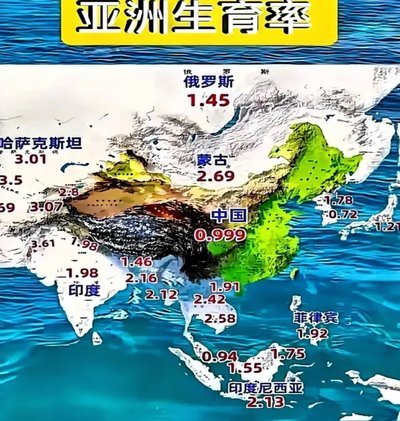
Meanwhile, Japan and South Korea are characterized by an "inverted pyramid" where the elderly outnumber the children. The low birth rates in Japan (often below 1 per woman) and Korea (often below 1) have led to a declining birth population. The "World Population Prospects" data confirms that the DRC's population is the primary engine of growth in the developing world, while Japan and South Korea represent the stagnation of the developed world. The DRC's high birth rate is not a "crisis" in the same way the "low birth rate" of Japan is a crisis of labor and economic contraction. However, it is a crisis of resources, infrastructure, and public health, as the country struggles to provide education and healthcare for a population that is growing by millions every decade.
The provided data from the CIA World Factbook and Wikipedia further underscores the scale. The DRC is the most populous country in Africa, and its population is among the fastest growing in the world. In 2020, the DRC had around 118 million people. The "Red and Black Population Data" shows that the population growth is a continuous process, with the "2005 born birth population" (children aged 0-5) representing a significant portion of the total. This contrasts with Japan, where the "2005 born birth population" is small relative to the total population, and with South Korea, where the birth rate is low.
Ultimately, the "DRC 6x Korea" claim is a simplification of a much broader reality. It is more accurate to say that the DRC is experiencing a "demographic explosion" driven by a high Total Fertility Rate (TFR), while Japan and South Korea are experiencing a "demographic implosion" driven by a low TFR. The DRC's population growth is projected to reach 5x by 2100, a number that dwarfs the stagnant or declining population of Japan and South Korea. This disparity is not just a matter of numbers; it is a fundamental difference in the global demographic landscape, with the DRC representing the future of population growth and Japan/Korea representing the challenge of a declining population.
相关文章

为何上海体育场浇水过多问题持续20余年?
### 上海体育场浇水过多的问题已持续20余年 上海体育场作为中国最大的体育场馆之一,其维护和管理一直是公众关注的焦点。然而,长期以来,该体育场面临一个困扰已久的问题——浇水过多。这个问题不仅影响了...

吴硕涛乌龙球助无锡1-0胜泰州
在一场至关重要的比赛中,无锡队凭借一次意外的进球,以1-0的小胜击败了对手泰州队。比赛进行到下半场,吴硕涛在禁区内解围时不慎自摆乌龙,成为了这场比赛的关键转折点。 整场比赛中,双方都在积极寻找破门机...

日本中场强于我们,万亚麦菲转会掀风云
### 日本中场的统治力与关键球员的战术价值:一场转会可能改变的亚洲足球格局 在亚洲足球版图中,日本队的中场实力始终是令对手忌惮的存在。无论是亚洲杯、世界杯预选赛,还是国际友谊赛,日本队的中场往往以...

青岛19岁新星首秀塞尔维亚甲级联赛
### 19岁青岛新星林子皓,完成塞尔维亚足球甲级联赛首秀 在世界足坛的舞台上,总有一些年轻的新星以其独特的才华和坚韧不拔的精神脱颖而出。2026年2月的一个周末,在距离中国万里之遥的贝尔格莱德,一...

袁博涵巴西留洋之旅
袁博涵站在宝安体校训练场的更衣室门口,手中攥着被汗水浸湿的行李票。6月的深圳潮湿闷热,但他此刻的思绪早已飞向万里之外的巴西。这个曾被林怀恩教练在社区球场一眼相中的少年,如今即将踏上留洋征程,而这场被无...
泰山双将闪耀主场3-1取连胜
北京时间4月26日,中超联赛第8轮,山东泰山坐镇主场迎战重庆铜梁龙,最终以3-1的比分获胜,迎来三连胜。比赛中,马德鲁加和谢文能分别打入两球,为球队立下汗马功劳。 开场之后,两队拼得非常激烈。第18...